
Introduction
English is full of interesting expressions that people use to communicate their feelings, hopes, and fears in everyday conversations. One such expression is “Don’t Jinx It,” a popular phrase used when someone wants to avoid tempting fate or bringing bad luck by speaking too confidently about a positive situation. Understanding this expression helps English learners sound more natural and conversational. It also makes it easier to recognize humor, emotions, and cultural references in everyday communication. Whether you are talking with friends, participating in professional discussions, or learning English idioms, knowing when and how to say “Don’t Jinx It” can make your conversations more expressive and engaging.
What Does “Don’t Jinx It” Mean?
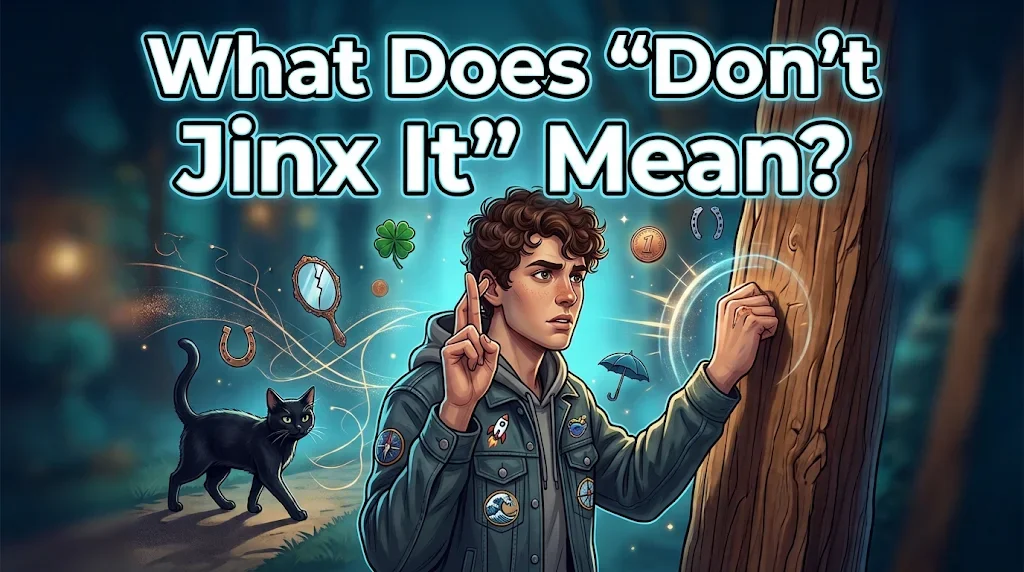
The expression “Don’t jinx it” means that you should not say something too confidently or celebrate a positive situation too early because you might somehow cause it to go wrong.People commonly use this phrase when something is going well, and they hope it continues that way. They may believe that talking about their good luck or expecting a successful outcome could tempt fate and bring an unwanted result.
For example:
- Your friend says, “We haven’t had any problems with the project so far.”
- You reply, “Don’t jinx it! We still have two days to finish.”
Understanding the Word “Jinx”
To understand the complete expression, it is helpful to understand the word jinx.
A jinx is something believed to bring bad luck or cause an unfortunate event. It can refer to a person, an action, or a situation that people associate with repeated misfortune.
The word can also be used as a verb.
- As a noun: He believes that the old house has a jinx.
- As a verb: Don’t jinx our chances of winning!
In everyday English, the word is usually used humorously or informally rather than as a serious statement about supernatural forces.
Examples of “Don’t Jinx It” in Everyday Conversations
The best way to understand an English expression is to see how people use it in realistic situations.
Here are ten examples with explanations.
1. “Everything is going perfectly today. Don’t jinx it!”
Meaning: Things are going well, so avoid making predictions that could supposedly bring bad luck.
2. “I think we are going to win the final. Don’t jinx it!”
Meaning: You hope your team wins, but you do not want to celebrate before the result is certain.
3. “The weather has been beautiful all week. Let’s hope it stays this way, but don’t jinx it.”
Meaning: You want the good weather to continue.
4. “My interview went really well. I think I might get the job.”
“That’s great! Don’t jinx it.”
Meaning: You are happy about the possibility but do not want to assume the result too early.
5. “We haven’t received any customer complaints this month. Don’t jinx it!”
Meaning: You hope the positive situation continues.
Synonyms and Alternative Expressions for “Don’t Jinx It”
Although “Don’t jinx it” is widely understood, English speakers use several other expressions to communicate similar ideas.
The best alternative depends on the situation, tone, and relationship between speakers.
1. Don’t Tempt Fate
Meaning: Avoid saying something that assumes a positive outcome before it actually happens.
Example: “We are definitely going to win the championship.”
Alternative response: “Don’t tempt fate. The match isn’t over yet.”
Best used: Sports competitions, exams, business goals, and important events.
2. Knock on Wood
Meaning: A superstitious expression used after mentioning something fortunate to avoid bringing bad luck.
Example: “I haven’t been sick all year, knock on wood!”
Best used: Talking about health, good fortune, successful projects, or peaceful situations.
3. Let’s Not Get Ahead of Ourselves
Meaning: Avoid making assumptions or celebrating before something is confirmed.
Example: “We might get the contract, but let’s not get ahead of ourselves.”
Best used: Workplace conversations, business negotiations, and personal achievements.
4. Don’t Count Your Chickens Before They Hatch
Meaning: Do not assume that something will happen before it actually does.
Example: “You haven’t received the admission letter yet, so don’t count your chickens before they hatch.”
Best used: Exams, job applications, financial expectations, and future plans.
5. Keep Your Fingers Crossed
Meaning: Hope that something positive will happen.
Example: “My results are coming tomorrow. Keep your fingers crossed!”
Best used: Waiting for important news, interviews, exams, and competitions.
6. Touch Wood
Meaning: A phrase similar to “knock on wood,” expressing the hope that good luck continues.
Example: “Our business has had a successful year so far, touch wood.”
Best used: Informal conversations, especially in British English.
7. Let’s Hope for the Best
Meaning: Express hope that a situation will have a positive outcome.
Example: “The weather forecast isn’t promising, but let’s hope for the best.”
Best used: Uncertain situations, travel plans, and important decisions.
8. Don’t Speak Too Soon
Meaning: Avoid making a confident statement before the final outcome is known.
Example: “You think the traffic will be light? Don’t speak too soon!”
Best used: Everyday conversations, travel, work, and competitions.
9. Stay Positive, but Be Careful
Meaning: Remain hopeful without becoming overly confident.
Example: “We have a good chance of winning, but stay positive and be careful.”
Best used: Professional discussions, team activities, and challenging situations.
10. Don’t Count on It Just Yet
Meaning: Do not assume that something will definitely happen.
Example: “The manager might approve your request, but don’t count on it just yet.”
Best used: Workplace discussions, financial matters, and uncertain plans.
Is “Don’t Jinx It” Formal or Informal?
“Don’t jinx it” is primarily an informal expression. It is common in everyday spoken English, text messages, and friendly conversations.
It is perfectly natural among friends, family members, and familiar coworkers. However, it may sound too casual in formal business writing, academic papers, or official communication.
Consider these alternatives for different situations:
| Situation | Recommended expression |
| Talking with friends | Don’t jinx it! |
| Talking with colleagues | Let’s not get ahead of ourselves. |
| Writing a professional email | Let’s wait for confirmation. |
| Discussing an uncertain result | Don’t speak too soon. |
| Expressing hope | Let’s hope for the best. |
Practical tip: Always consider your audience. An expression can be grammatically correct but still sound unsuitable for a particular situation.
Origin and History of “Jinx”
The exact origin of the expression “Don’t jinx it” is not completely established, but the word jinx has a history connected with superstition and bad luck. The word jinx entered English usage in the early twentieth century. It is often associated with the idea of bringing misfortune through a person, action, or spoken statement.
One proposed connection is the Greek word iynx, referring to a bird associated with ancient magical practices. However, the precise historical development of the modern English word is uncertain. Over time, jinx became a familiar informal term for bad luck. People began using expressions such as “Don’t jinx it” when they wanted to avoid speaking too confidently about a favorable situation. Today, the phrase is widely used in English-speaking cultures. Most people use it humorously rather than believing that mentioning good fortune can actually change the future.
Fun Facts About the Expression
- People sometimes say “jinx!” when two people accidentally speak the same word at the same time.
- “Knock on wood” and “touch wood” express a similar superstitious idea.
- The expression can be used positively, even though the word jinx is associated with bad luck.
- People often use it when they are excited but do not want to celebrate too early.
- It is especially common in conversations about sports, exams, weather, and important plans.
Common Mistakes to Avoid When Using “Don’t Jinx It”
English learners sometimes understand an expression but struggle to use it naturally. Here are some mistakes worth avoiding.
Mistake 1: Using It Only for Negative Situations
Incorrect understanding: “Don’t jinx it” is only used when something bad happens.
Correct understanding: It is generally used when something good is happening or a positive outcome seems possible.
Example: “Everything is going well. Don’t jinx it!”
Mistake 2: Confusing It With “Don’t Curse It”
Although these expressions may seem similar, they are not interchangeable in every situation.
“Don’t jinx it” is a common conversational expression about supposedly bringing bad luck.
“Don’t curse it” is not the usual natural alternative in this context.
Mistake 3: Using It in Every Professional Conversation
The expression may sound too casual in formal settings.
Instead of:
“Don’t jinx it! We might get the deal.”
Use:
“Let’s wait until the agreement is officially confirmed.”
Tips for Using “Don’t Jinx It” Naturally
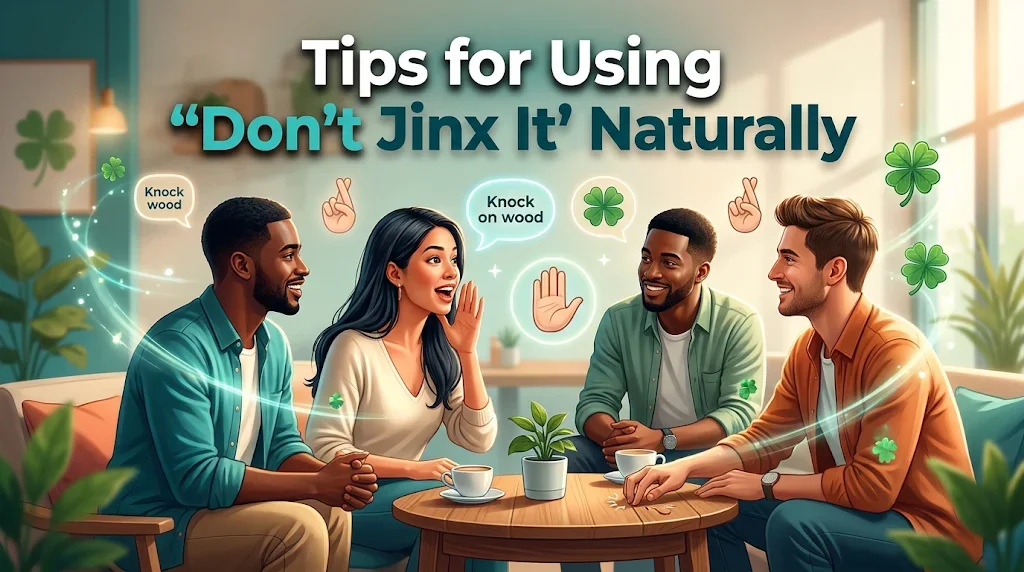
Here are some practical strategies to help you use the expression correctly.
1. Use it when something positive is happening. It works best when someone is discussing good luck, progress, or an expected success.
2. Keep your tone friendly. A lighthearted tone makes the expression sound natural rather than negative.
3. Learn it through conversations. Reading examples and practicing short dialogues can help you remember its meaning.
Practice Exercises: Test Your Understanding
Learning an English expression becomes easier when you practice using it in different situations. Try the following exercises to test your understanding of “Don’t Jinx It.”
Exercise 1: Fill in the Blanks (Easy)
Complete each sentence using the correct expression.
Choose from: Don’t jinx it, knock on wood, don’t speak too soon, keep your fingers crossed.
- Everything is going perfectly today. __________!
- I haven’t been sick all year, __________.
- Our team is winning, but the match isn’t finished. __________!
- My job interview is tomorrow. Please __________.
Exercise: Create Your Own Sentences (Advanced)
Write one sentence using “Don’t jinx it” in each of the following situations:
- Your favorite sports team is winning.
- Your friend has received a promising job interview.
- Your family is planning a holiday with good weather expected.
- Your colleague has completed most of a difficult project successfully.
- Your examination results are expected tomorrow.
Try to make each sentence sound natural and conversational.
Answer Key
Exercise 1: Fill in the Blanks
- Don’t jinx it!
- Knock on wood.
- Don’t speak too soon.
- Keep your fingers crossed.
Exercise 2: Sample Answers
- “Our team is playing brilliantly. Don’t jinx it!”
- “Your interview sounds promising, but don’t jinx it!”
- “The forecast looks perfect. Don’t jinx it!”
- “We’re almost finished with the project. Don’t jinx it!”
- “I think I did well in my exams. Don’t jinx it!”
Conclusion: Use “Don’t Jinx It” With Confidence
“ A useful English expression that adds personality, humor, and emotion to everyday conversations is Don’t Jinx It”. It is commonly used when something positive is happening, and someone wants to avoid tempting fate or celebrating before the outcome is certain. Throughout this guide, we explored its meaning, examples, synonyms, origin, common mistakes, and practical applications. We also learned how it differs from expressions such as “Knock on Wood” and “Don’t Tempt Fate.”
Try using “Don’t Jinx It” in your conversations, practice the exercises, and explore similar English idioms to expand your vocabulary. Remember, learning English is not only about understanding grammar and vocabulary; it is also about knowing how people express their thoughts and feelings in real-life situations.
FAQ:
1. What does “Don’t Jinx It” mean in simple English?
“Don’t jinx it” means don’t say something too confidently when things are going well because you do not want to supposedly bring bad luck or spoil a positive situation.
2. Is “Don’t Jinx It” a positive or negative expression?
It is generally a playful or cautious expression. Although the word jinx relates to bad luck, the complete phrase is usually used when someone hopes a good situation will continue.
3. What is another way to say “Don’t Jinx It”?
Some common alternatives include “Don’t tempt fate,” “Knock on wood,” “Touch wood,” and “Don’t speak too soon.” Each expression has a slightly different meaning and usage.
4. Can I use “Don’t Jinx It” in professional conversations?
Yes, you can use it with familiar colleagues in casual workplace conversations. However, for formal meetings, presentations, and business emails, expressions such as “Let’s not get ahead of ourselves” may be more appropriate.
5. What is the difference between “Don’t Jinx It” and “Knock on Wood”?
“Don’t jinx it” warns someone against saying something that might supposedly bring bad luck. “Knock on wood” is usually said after mentioning something fortunate to express the hope that the good situation continues.
6. Is “Don’t Jinx It” an idiom?
Yes. It is a common informal English expression with a figurative meaning connected to superstition and bad luck. Its meaning is not simply the literal meaning of its individual words.
7. Can I use “Don’t Jinx It” in text messages?
Absolutely! It is common in casual text messages, social media conversations, and online chats.
For example:
Friend: “I think I finally have everything under control!”
You: “Haha, don’t jinx it!”

I am passionate about the English language, grammar, vocabulary, and effective communication. Through Grammar Hub Pro, I aim to help students, professionals, teachers, and English learners improve their language skills. I enjoy exploring English grammar rules, discovering useful words, explaining idioms and phrases, and sharing practical writing tips. My goal is to make learning English simple, clear, and enjoyable for everyone. I create helpful, easy-to-understand content with practical examples so readers can use English more confidently in everyday conversations, academic studies, and professional communication. I believe learning English should be accessible to everyone.